DRUMMONDVILLE CA
DRUMMONDVILLE
HomeSlopes & WallsDebris Flow Analysis

Debris Flow Analysis in Drummondville

Site investigations you can build on.

LEARN MORE

The St. François River cuts through Drummondville, creating steep valley slopes made of marine clay and till. These deposits are prone to erosion and sudden saturation during spring thaws. Heavy rainfall events, common in the region, can trigger fast-moving debris flows that threaten infrastructure near the river corridor. We combine field reconnaissance with numerical modeling to map initiation zones and runout paths. Before modeling, we often run a groundwater infiltration test to understand how quickly water enters the slope. That data feeds directly into the stability analysis.
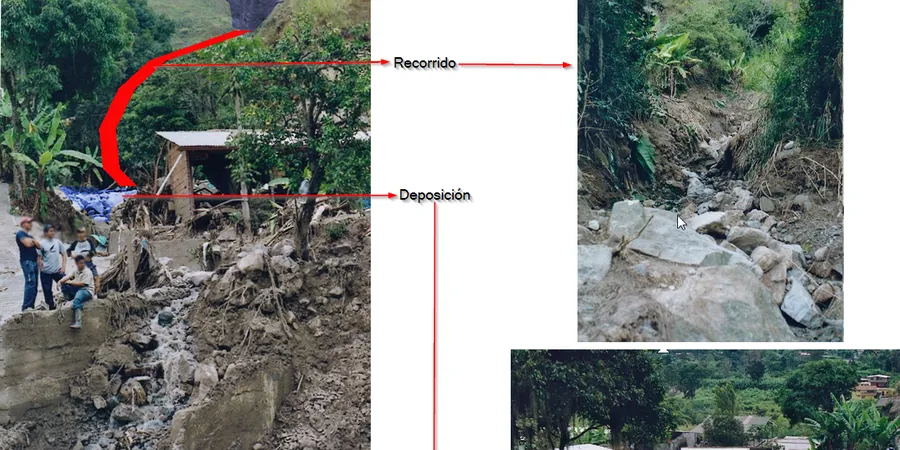
Illustrative image of Debris flow analysis in Drummondville
In Drummondville's clay slopes, debris flow often follows a 50 mm rainfall event within 24 hours. Timing is everything.

Our service areas

Methodology and scope

A recent project involved a residential development on the south bank of the river. The site had a 25-meter slope with a history of small slumps. We performed debris flow analysis using three approaches. First, we mapped soil types and identified loose colluvium layers. Second, we modeled rainfall scenarios using local intensity-duration curves from Environment Canada. Third, we estimated runout distance with a numerical flow model. The results helped design a drainage system and retaining wall at the toe. For the slope itself, we also ran a stability analysis with limit equilibrium to confirm safety factors under saturated conditions.
Technical reference — Drummondville

Local considerations

The biggest risk in Drummondville is underestimating the speed of debris flows. A typical event can travel 15 km/h down a 20-degree slope. That gives very little warning for houses or roads below. Many past incidents started after three days of continuous rain when the clay layers became fully saturated. We always advise monitoring pore pressure during wet seasons and installing early warning systems where exposure is high.

Need a geotechnical assessment?

Reply within 24h.

Email: contact@geotechnical-engineering.org

Applicable standards

NBCC 2020 – Section 4.1.8 (geotechnical hazards), CFEM (soil description), ASTM D4220-14 (preservation and transport of soil samples)

Technical parameters

ParameterTypical value
Slope angle (degrees)15 – 35
Soil typeMarine clay, silty till, colluvium
Trigger rainfall (mm/24h)50 – 75
Runout distance (m)50 – 200
Factor of safety (static)1.3 – 1.5
Factor of safety (seismic)1.1 – 1.2

Frequently asked questions

How is debris flow different from a landslide in Drummondville?

A debris flow moves as a fast, fluid mixture of soil, water, and debris. A landslide typically slides as a coherent block. In Drummondville's clay slopes, debris flows are more common after intense rain, while landslides occur along pre-existing shear planes in the marine clay.

What triggers debris flows in the St. François River valley?

The main triggers are heavy rainfall (over 50 mm in 24 hours), rapid snowmelt, and erosion at the toe of the slope. Human activities like excavation or improper drainage can also start a flow. We model these triggers to set site-specific thresholds.

How much does debris flow analysis cost in Drummondville?

A typical analysis for a residential or small commercial site ranges from CA$1,780 to CA$4,920. The final cost depends on site size, slope complexity, and the need for field testing. We provide a detailed quote after a site visit.

Do I need a debris flow study for a property near the river?

Yes. The NBCC 2020 requires a geotechnical hazard assessment for any construction within 30 meters of a slope steeper than 15 degrees. If your property is near the St. François River, a debris flow analysis is likely mandatory for your building permit.

Location and service area

We serve projects across Drummondville.

Location and service area

Explanatory video