DRUMMONDVILLE CA
DRUMMONDVILLE
HomeGround improvementEspecificación de geomembranas

Geomembrane Specification for Environmental Containment in Drummondville

Site investigations you can build on.

LEARN MORE

Drummondville sits on the St. Lawrence Lowlands at roughly 90 m elevation, underlain by marine clay deposits left by the Champlain Sea. That clay shrinks when dry and can crack, which makes geomembrane specification a critical step for any environmental containment project in the region. We work with project owners to define the correct polymer type, thickness, and textured surface required to seal against the underlying soil. Before specifying the geomembrane, we often run a permeability field test to measure hydraulic conductivity of the subgrade and a plate load test to confirm bearing capacity under the liner — both feed directly into the design parameters of the barrier system.
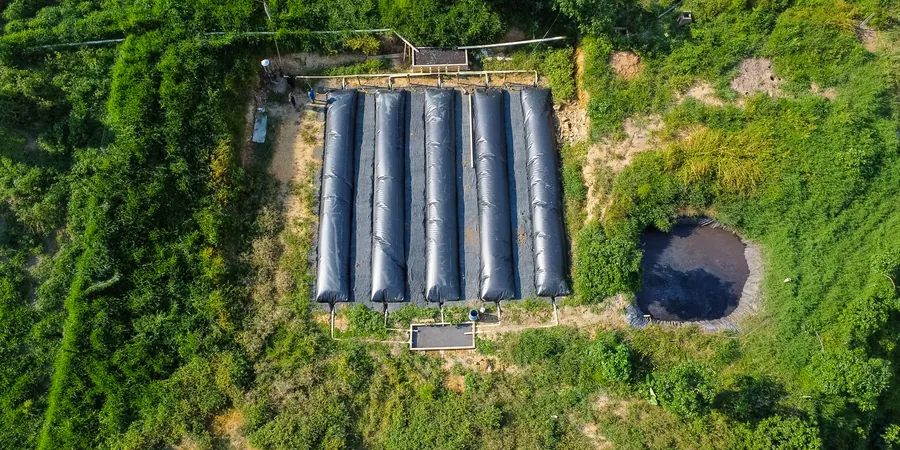
Illustrative image of Geomembrane specification in Drummondville
A geomembrane specified without freeze-thaw data from the subgrade can develop stress cracks in the first winter — we verify the clay behavior before sealing it.

Our service areas

Methodology and scope

The freeze-thaw cycles in Drummondville — the city records an average of 130 frost days per year — impose unique demands on geomembrane specification. Our technical team evaluates thermal expansion coefficients and seam peel strength at subzero temperatures, ensuring the liner stays intact through winter contraction and spring thaw. The key parameters we define include:
  • Thickness (typically 1.5 to 2.0 mm for HDPE liners in containment applications)
  • Textured vs. smooth surface — textured is mandatory on slopes exceeding 3H:1V to increase interface friction with the clay subgrade
  • Seam strength criteria per ASTM D6392, with overlap width and wedge temperature settings adjusted for the local climate
This level of detail prevents future leaks and avoids costly repairs after the first winter cycle.
Technical reference — Drummondville

Local considerations

The biggest risk we see in Drummondville projects is specifying a smooth geomembrane on a clay subgrade that undergoes differential settlement. The Champlain Sea clay has an undrained shear strength that can drop below 30 kPa near the surface, and a smooth liner on that base can slide under hydraulic pressure. We use the inclined plane test (ASTM D5321) to measure interface friction between the geomembrane and the local clay, then specify the textured surface with the required asperity height. That single decision avoids slope instability failures that would otherwise require a full liner replacement.

Need a geotechnical assessment?

Reply within 24h.

Email: contact@geotechnical-engineering.org

Explanatory video

Applicable standards

GRI-GM13 (Standard Specification for HDPE Geomembranes), ASTM D6392 (Seam Strength Evaluation), ASTM D7466 (Textured Geomembrane Measurement), NBCC 2020 (Environmental Containment Provisions)

Technical parameters

ParameterTypical value
Polymer typeHDPE (GRI-GM13) or LLDPE (GRI-GM17)
Thickness range0.75 mm (temporary caps) to 2.5 mm (landfill cells)
Textured surfaceSingle or co-extruded per ASTM D7466
Seam peel strengthMin. 20 kPa at 23°C per ASTM D6392
UV resistanceCarbon black content 2.0–3.0% per ASTM D1603
Tear resistance≥ 125 N per ASTM D1004 (2.0 mm HDPE)

Frequently asked questions

What thickness of geomembrane is recommended for a municipal landfill in Drummondville?

For a Class 2 municipal landfill in Quebec, the minimum recommended HDPE thickness is 1.5 mm, but most engineers specify 2.0 mm to meet the province's environmental guidelines and provide long-term durability against puncture and stress cracking.

How much does a geomembrane specification study cost in Drummondville?

A full specification study including subgrade testing, interface friction evaluation, and seam qualification typically ranges from CA$940 to CA$2,150 depending on project complexity and number of trials required.

Do I need a textured geomembrane on slopes in Drummondville?

Yes, on slopes steeper than 3H:1V a textured surface is strongly recommended to increase interface friction with the underlying clay. The Champlain Sea clay can become slippery when wet, and a smooth liner on a 2H:1V slope may slide under its own weight during heavy rain.

Location and service area

We serve projects across Drummondville.

Location and service area