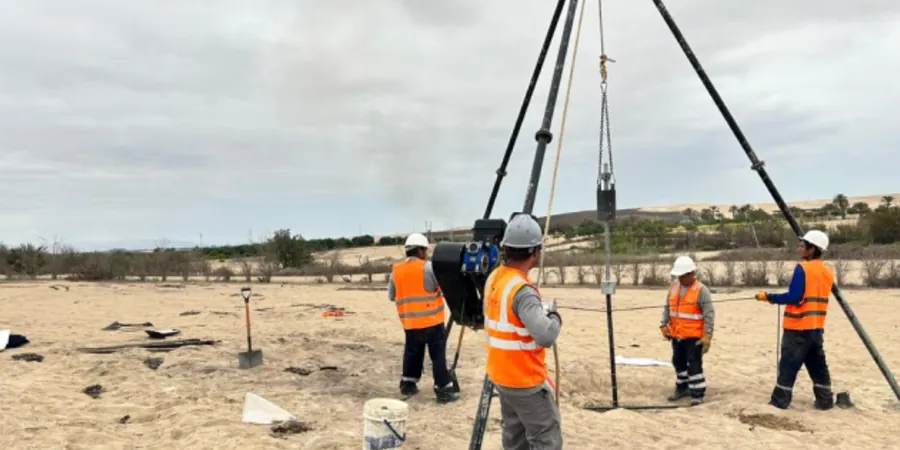
Drummondville grew rapidly during the industrial expansion of the early 20th century, with neighborhoods spreading onto the flat terraces of the Saint-François River valley. Those post-glacial clay deposits, left by the Champlain Sea, are precisely the kind of soil that causes long-term foundation headaches. When a clay-rich layer dries it shrinks, and when it wets it swells — enough to lift a corner of a house or crack a slab. That is why expansive soil evaluation in Drummondville has become a standard prerequisite for any new construction or renovation that involves a footing. The team typically begins by correlating the local geological maps with the project's location, then moves to field sampling to confirm the clay mineralogy and plasticity index. Before designing the foundation, it is wise to combine this work with a density test using the sand cone method to verify compaction of any existing fills.
A plasticity index above 35 combined with natural moisture below the plastic limit indicates a high-expansion risk in post-glacial Champlain Sea clays.